Michigan Cannabis Laws Explained: A Beginner’s Guide in 2026

by The Center Co Team | October 13, 2026
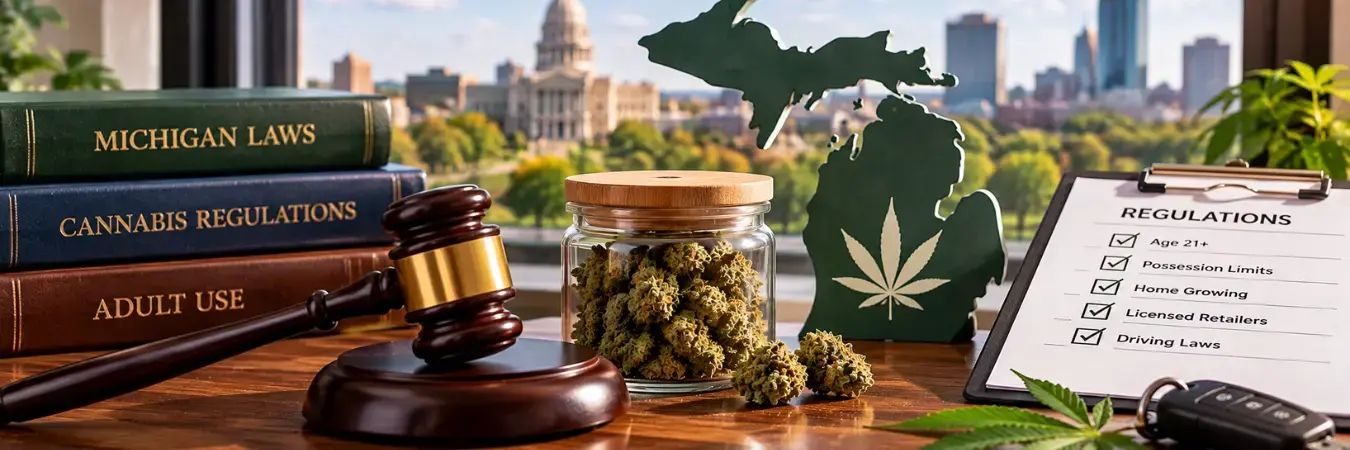
Michigan permits adults aged 21 and older to use cannabis under specific state laws. However, legalization does not mean cannabis can be used everywhere or in any amount.
Rules cover possession, home growing, driving, taxes, and licensed retailers. Federal law also creates restrictions that remain important.
This guide explains Michigan cannabis laws in 2026, so keep reading to understand the main rules and find reliable official resources.
Understanding Cannabis Legalization in Michigan
Michigan voters approved adult-use cannabis legalization in 2018. The Michigan Regulation and Taxation of Marihuana Act (MRTMA) established the main rules for personal use. Eligible adults can possess, use, and purchase cannabis within state limits. However, other state laws, federal restrictions, and local rules may still apply.
Is Cannabis Legal in Michigan in 2026?
Yes. Michigan permits adult-use cannabis for people aged 21 and older. Adults may possess limited amounts, purchase products from licensed retailers, and grow cannabis at home under specific conditions. Nevertheless, public consumption and driving while impaired remain prohibited.
Michigan law does not allow unlimited possession or unrestricted use. For example, adults generally may possess up to 2.5 ounces outside their residence. At home, they may store larger amounts under specific security requirements. Therefore, understanding where cannabis is kept matters.
Michigan State Law vs. Federal Cannabis Law
Michigan law permits certain cannabis activities, but federal law operates separately. Cannabis remains subject to federal restrictions, even when state law allows personal use. Consequently, an activity permitted in Michigan may still create legal risks in certain federal settings.
This distinction matters when traveling or entering federal property. Do not take cannabis across state lines, even when both states permit adult-use cannabis. Also, check the rules before entering federal buildings or other federally controlled locations.
The Role of the Michigan Cannabis Regulatory Agency (CRA)
The Michigan Cannabis Regulatory Agency (CRA) oversees the state's licensed cannabis industry. It regulates licensed businesses and provides information about licensing, laws, and compliance. Consumers can use official CRA resources to learn about the regulated market.
Before buying cannabis, confirm that the retailer holds an appropriate state license. The CRA website also provides official regulatory information and updates. Visit the Michigan Cannabis Regulatory Agency for current guidance.
Michigan Cannabis Age, Possession, and Purchase Limits
Michigan's adult-use rules establish limits for age and possession. Following these requirements can help adults avoid unnecessary legal problems. However, medical cannabis patients may follow different rules under Michigan's medical marijuana laws.
What Is the Legal Age to Buy Cannabis in Michigan?
Adults must be at least 21 years old to purchase recreational cannabis in Michigan. Licensed retailers may ask customers to present valid identification. Bring acceptable government-issued identification and follow the retailer's verification process.
Do not purchase cannabis for someone under the legal age. Adults should also avoid providing cannabis to minors. Medical cannabis follows separate eligibility and program requirements.
Michigan Cannabis Possession Limits for Adults
Michigan generally allows adults aged 21 and older to possess up to 2.5 ounces of cannabis. No more than 15 grams of that amount may be cannabis concentrate. Different rules apply to cannabis stored at home.
At home, adults may possess up to 10 ounces, plus cannabis produced by plants grown there. However, amounts exceeding 2.5 ounces must be stored in a locked container or secured area. These rules help prevent unauthorized access.
The following table summarizes several key adult-use limits.
Activity | General Michigan rule |
Minimum age for adult-use cannabis | 21 years old |
Possession outside the residence | Up to 2.5 ounces |
Concentrate within the general possession limit | No more than 15 grams |
Cannabis stored at home | Up to 10 ounces, plus homegrown cannabis |
Personal home cultivation | Up to 12 plants per residence |
Public consumption | Not permitted under the adult-use law |
These figures summarize general rules, not every possible legal circumstance. Check the Michigan Regulation and Taxation of Marihuana Act before relying on them.
Cannabis Purchase Limits and Identification Requirements
Licensed retailers must follow state requirements when selling adult-use cannabis. Customers should expect age verification and applicable transaction limits. Retailers must also comply with rules governing different product types.
Do not assume every cannabis product uses the same measurement. Flower, concentrates, and infused products may have different rules. Ask a licensed retailer to explain the applicable limits if you are unsure.
Rules for Storing Cannabis at Home
Store cannabis securely and prevent access by children or unauthorized people. Michigan law requires amounts exceeding 2.5 ounces kept at home to remain in a locked container or secured area. Responsible storage also reduces the risk of accidental ingestion.
Keep cannabis separate from ordinary food, especially products that resemble sweets. Follow product-label instructions and use appropriate secure packaging. In addition, never leave cannabis unsecured in a shared living space or vehicle.
Michigan Home Cannabis Cultivation Laws
Michigan allows eligible adults to grow cannabis for personal use. However, home cultivation must follow plant limits and security requirements. Rental agreements and local circumstances may also affect what is permitted.
How Many Cannabis Plants Can You Grow at Home?
Adults aged 21 and older may grow up to 12 cannabis plants at home for personal use. The limit applies to the residence, rather than allowing every adult an additional 12 plants. Keep the total within the applicable legal limit.
Home cultivation does not authorize commercial growing or sales. Businesses generally need appropriate licenses to operate commercially. Therefore, check the rules before selling cannabis or operating a growing business.
Home-Growing Security and Visibility Requirements
Michigan restricts cultivation that is visible from a public place without optical aids. Homegrown cannabis must also meet applicable security requirements. These rules help prevent unauthorized access and protect the public.
Keep plants in a secure location away from minors. Check local ordinances and property requirements before creating a growing area. Also, review the current state law to confirm that your setup meets all applicable conditions.
Michigan Cannabis Driving, Transportation, and Travel Laws
Cannabis legalization does not remove road-safety requirements. Drivers must remain unimpaired and follow applicable transportation rules. Travel across state or federal boundaries can create additional legal complications.
Driving Under the Influence of Cannabis
Do not drive while impaired by cannabis. Michigan law prohibits operating a vehicle under the influence of marijuana. Impairment can affect attention, coordination, reaction time, and judgment.
Cannabis affects people differently depending on the product, amount, and individual. There is no reliable shortcut for deciding that you are safe to drive. Instead, arrange a sober driver or another safe way home.
Transporting Cannabis in a Vehicle
Follow applicable possession rules when transporting cannabis. Keep products secured and avoid using cannabis while driving or riding in a vehicle. Never operate a vehicle after consuming a product that impairs your abilities.
Transportation rules may depend on the circumstances and applicable law. Therefore, do not assume an open container or unsecured product is acceptable. Check current Michigan requirements before traveling with cannabis.
Taking Cannabis Across State Lines and Onto Federal Property
Do not take cannabis across state lines. Another state may have different laws, and federal restrictions can apply to interstate transportation. Legal possession in Michigan does not automatically authorize possession elsewhere.
Federal property also presents separate legal risks. This may include certain federal buildings, parks, and federally controlled locations. Check out the applicable rules before traveling to your destination.
Michigan Cannabis Laws for Out-of-State Visitors
Visitors aged 21 and older may purchase adult-use cannabis from licensed Michigan retailers, subject to applicable requirements. However, a legal purchase does not authorize public consumption or interstate transportation. Visitors must also follow restrictions on impaired driving.
Plan ahead before purchasing cannabis during a visit. Confirm where consumption is permitted and review accommodation policies. Hotels and rental properties may prohibit cannabis use, even when state law allows personal possession.
Medical vs. Recreational Cannabis Laws in Michigan
Michigan has separate legal frameworks for adult-use and medical cannabis. Both operate under state requirements, but eligibility and certain protections differ. Patients should consult official medical-program guidance for rules that apply to their circumstances.
Key Differences Between Medical and Adult-Use Cannabis
Adult-use cannabis is generally available to people aged 21 and older. Medical cannabis operates under Michigan's medical marijuana laws and related program requirements. Qualifying patients may receive protections that do not apply to every recreational consumer.
Topic | Adult-use cannabis | Medical cannabis |
Main eligibility | Adults aged 21 and older | Qualifying patients meeting program rules |
Access | Licensed adult-use retailers | Authorized medical pathways |
Legal framework | MRTMA and related rules | Michigan medical marijuana laws |
Special protections | General adult-use protections | Certain patient and caregiver protections |
This comparison is a general overview. Specific purchasing, possession, and cultivation rules depend on the applicable law and the person's status.
Michigan Medical Marijuana Card Requirements
Michigan's medical cannabis program has eligibility and application requirements. Applicants should review the current rules, necessary documentation, and official application process. Avoid relying on outdated forms or unofficial summaries.
For accurate information, visit the state's medical marijuana resources. Official guidance explains current requirements for patients and caregivers. Consult a qualified professional if you need help understanding eligibility.
Medical Cannabis Possession Rules and Tax Considerations
Registered medical cannabis patients may qualify for protections under Michigan's medical marijuana laws. Their rules may differ from those governing adult-use purchases. Patients should verify current limits and requirements through official state resources.
Tax treatment also differs between medical and adult-use products. Michigan's 24% wholesale marijuana tax generally applies to specified adult-use transactions. However, some transfers from medical inventory to adult-use retailers are taxable. Check the Michigan Treasury's official guidance for details.
Michigan Cannabis Taxes and Regulatory Changes in 2026
Michigan's cannabis tax rules changed in 2026. Consumers should understand the taxes charged at retail, while businesses must consider wholesale tax requirements. These taxes apply at different stages of the supply chain.
Adult-Use Cannabis Retail Excise Tax and Sales Tax
Adult-use cannabis purchases are subject to Michigan's 10% retail excise tax and 6% state sales tax. These taxes apply at the retail stage, subject to applicable law. Therefore, the total at checkout may exceed the product's listed price.
Review your receipt to understand the taxes charged. Retailers should explain applicable charges when customers have questions. Do not confuse retail taxes with the separate wholesale tax introduced in 2026.
Michigan's 24% Wholesale Cannabis Excise Tax in 2026
Michigan introduced a 24% wholesale tax on specified adult-use cannabis sales and transfers beginning January 1, 2026. The Michigan Department of Treasury administers this tax. It applies to certain transactions between licensed cannabis businesses and retailers.
The wholesale tax generally applies to the first sale or transfer from a licensed establishment to an adult-use retailer. It can also apply to specified transfers and products produced by certain vertically integrated businesses. The wholesaler is generally responsible for paying and remitting the tax.
For current details, read the Michigan Treasury's wholesale marijuana tax guidance. Treasury published finalized formal guidance in March 2026. Businesses should review it before calculating their obligations.
How Wholesale Cannabis Taxes Differ From Retail Taxes
Wholesale and retail taxes apply at different stages. The wholesale tax concerns certain business transactions. Meanwhile, the retail excise tax and sales tax apply when consumers make qualifying purchases.
Tax | Rate | Stage |
Wholesale adult-use cannabis tax | 24% | Certain wholesale sales or transfers |
Adult-use retail excise tax | 10% | Retail purchase |
Michigan state sales tax | 6% | Retail purchase, subject to applicable law |
The 24% wholesale tax does not mean consumers automatically pay an additional 24% tax at checkout. The legal obligation generally falls on the wholesaler, although businesses may pass costs through commercially. See the official Treasury guidance for details.
Penalties for Violating Michigan Cannabis Laws
Legalization does not remove penalties for prohibited conduct. Consequences depend on the circumstances, the amount involved, and the law that applies. Violations may also involve local restrictions or federal law.
Possession, Consumption, and Cultivation Violations
Possessing more than the permitted amount, consuming cannabis in prohibited places, or violating home-growing rules can create legal problems. Selling cannabis without required authorization can also lead to penalties. The outcome depends on the facts and applicable law.
Do not assume a minor violation carries no consequences. Check the law before possessing, growing, sharing, or consuming cannabis. Seek qualified legal advice if you face a specific allegation.
Cannabis-Impaired Driving and Transportation Offenses
Driving while impaired by cannabis can lead to serious consequences. These may include criminal penalties and driving-related sanctions. The exact outcome depends on the circumstances and applicable law.
Never rely on how alert you feel about deciding whether to drive. Cannabis impairment can affect reaction time and judgment. Choose a sober ride whenever there is any doubt.
State and Federal Legal Consequences
Michigan law and federal law do not always align. An activity permitted under state law may remain restricted in federal settings. Interstate transportation can also create legal risks.
For this reason, check the rules for the specific location and activity involved. Official government resources provide a useful starting point. A qualified attorney can explain how the law applies to your situation.
How to Verify a Licensed Cannabis Business in Michigan
Buying from a properly licensed retailer helps consumers use the regulated market. Michigan provides official resources for cannabis business licensing and compliance. Checking these resources can help distinguish licensed businesses from unauthorized sellers.
Checking Cannabis Business Licenses Through the Michigan CRA
Start with the Michigan CRA website and its licensing resources. Confirm that the business holds the appropriate license for its activity. Do not rely only on social media posts or third-party directory listings.
Check the business name and location carefully. If the information appears inconsistent, contact the agency or business directly. Official records should take priority over unverified online claims.
Understanding Cannabis Retailer Compliance Requirements
Licensed cannabis businesses must follow state requirements governing their operations. These rules can cover licensing, sales, product handling, and other compliance duties. Requirements may change as Michigan updates its regulations.
Consumers can review CRA announcements and official guidance for updates. Businesses should also monitor applicable rules and notices. When a question concerns legal compliance, use current official documents rather than assumptions.
Frequently Asked Questions About Michigan Cannabis Laws
1. Is Recreational Cannabis Legal in Michigan in 2026?
Yes. Adults aged 21 and older may use and possess adult-use cannabis within Michigan's legal limits. However, public consumption, impaired driving, and other prohibited activities remain restricted.
2. How Much Cannabis Can You Legally Possess in Michigan?
Adults generally may possess up to 2.5 ounces outside their residence. At home, the rules allow up to 10 ounces, plus cannabis produced by plants grown there, subject to storage requirements. No more than 15 grams of the general possession amount may be concentrate.
3. Can You Grow Cannabis at Home in Michigan?
Yes. Adults aged 21 and older may grow up to 12 cannabis plants at home for personal use. Cultivation must follow applicable security, visibility, and other legal requirements.
4. Can You Smoke Cannabis in Public in Michigan?
No. Michigan's adult-use law does not authorize public consumption. Property owners and local rules may also restrict cannabis use on private premises.
5. Can You Drive with Cannabis in Your Car?
Transportation rules depend on the circumstances and applicable laws. Keep cannabis secured and follow all possession requirements. Never drive while impaired by cannabis.
6. Can You Take Cannabis from Michigan to Another State?
Do not transport cannabis across state lines. Michigan legalization does not automatically authorize interstate transportation, even if another state also permits cannabis.
7. Do Medical Cannabis Patients Follow Different Rules?
Yes. Registered patients may qualify for protection under Michigan's medical marijuana laws. They should check official program guidance for current eligibility, possession, purchasing, and caregiver requirements.
Where to Find Official Michigan Cannabis Law Updates
Cannabis rules and tax requirements can change. Before making decisions, confirm the latest information through official Michigan resources. This is especially important for taxes, medical eligibility, driving, and legal penalties.
Michigan Cannabis Regulatory Agency Resources
Visit the Michigan Cannabis Regulatory Agency for licensing information, cannabis laws, rules, and industry updates. Its adult-use and medical cannabis pages explain the state's regulatory frameworks. Check the publication date of any guidance you use.
Official Michigan Statutes and Regulatory Guidance
For legal text, consult the Michigan Regulation and Taxation of Marihuana Act. For 2026 wholesale tax requirements, consult the Michigan Department of Treasury's wholesale marijuana tax page. Use official documents when checking exact limits or compliance obligations.
Disclaimer: Michigan Cannabis Laws and Legal Information
This article is intended for general informational and educational purposes only. It does not constitute legal advice and should not replace advice from a qualified legal professional.
Cannabis laws, tax rules, and regulatory guidance may change. Readers should verify current requirements through official Michigan government resources before acting.
The Center Co does not guarantee that this article covers every legal situation or remains current after publication.