What Are Cannabis Edibles? A Beginner’s Guide to Edibles

by The Center Co Team | October 7, 2026
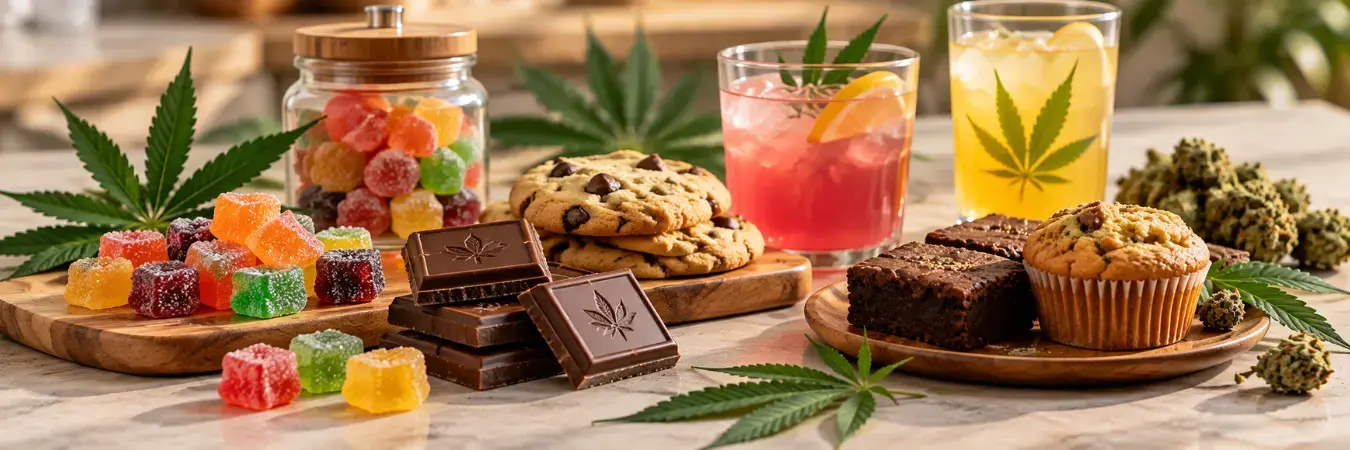
Cannabis edibles are foods or drinks infused with cannabis compounds such as THC or CBD. They offer an alternative to smoking or vaping cannabis. However, edibles work differently because your body processes them through digestion.
As a result, their effects can take longer to appear and may last longer. This guide explains how edibles work, common types, THC and CBD, dosage, timing, and safe use.
How Cannabis Edibles Work
Cannabis edibles enter your body through the digestive system. Unlike inhaled cannabis, they do not reach your bloodstream through your lungs. Instead, your body must digest and absorb the cannabis compounds first.
This process helps explain why edibles can feel different from smoking or vaping. Their effects usually take longer to appear. However, the effects can also last longer once they begin.
When you consume an edible containing THC, your digestive system absorbs the compound. Your liver then processes much of the THC before it reaches your bloodstream. This process creates metabolites, including 11-hydroxy-THC, which can contribute to the effects of edible cannabis.
Research shows that oral THC can have a highly variable absorption pattern. Therefore, the same product may affect different people in different ways.
What Happens After You Eat an Edible?
After you consume an edible, the cannabis compounds travel through your digestive system. Your body then breaks down and absorbs these compounds.
For THC products, the liver plays an important role in processing the compound. The resulting metabolites can contribute to the effects associated with edible cannabis.
This process takes time. Therefore, you may not notice effects immediately after eating an edible.
Your individual response can also vary. Factors such as food intake, metabolism, product type, and THC content may affect your experience.
Why Edibles Take Longer to Work?
Smoking and vaping deliver cannabinoids through the lungs. Therefore, their effects can begin relatively quickly.
Edibles follow a different route. They must pass through digestion and metabolism before their effects become noticeable.
The CDC reports that edible cannabis can take about 30 minutes to two hours to produce intoxicating effects.
This delay is especially important for beginners. Taking more before the first serving takes effect can result in stronger effects than expected.
Common Types of Cannabis Edibles
Cannabis edibles come in many different forms. Your choice may depend on your preferred format, cannabinoid content, and serving information.
Common types include:
- Gummies
- Chocolates
- Candies
- Mints
- Baked goods
- Cannabis-infused beverages
- Other infused foods
Each product can have different ingredients and cannabinoid amounts. Therefore, always check the label before consuming an edible.
Gummies, Candies, and Mints
Gummies are one of the most familiar types of cannabis edibles. They come in different flavors, shapes, potencies, and cannabinoid combinations.
Cannabis candies and mints provide another simple format. However, the product type is only part of the decision.
The THC or CBD amount matters just as much. Therefore, check the cannabinoid information and serving size before consuming the product.
Chocolates and Baked Goods
Cannabis-infused chocolates and baked goods are also common edible options. These products can include chocolates, cookies, brownies, and other treats.
Because these products contain food ingredients, the overall product composition can vary. Therefore, read the ingredient and serving information carefully.
It is also helpful to remember that familiar food packaging does not mean the product works like ordinary food. Cannabis-infused products can produce noticeable effects when they contain THC.
Cannabis-Infused Beverages
Cannabis beverages are drinks infused with cannabinoids. They can include different beverage styles and cannabinoid profiles.
If a beverage contains THC, it can produce intoxicating effects. Therefore, the same basic principles apply as with other edibles.
Check the label, understand the serving size, and give the product enough time to take effect.
THC vs. CBD in Cannabis Edibles
THC and CBD are two well-known cannabinoids found in cannabis. However, they have different properties and effects.
Understanding the difference can make edible labels easier to understand. It can also help you compare products based on their cannabinoid content.
Understanding THC in Edibles
THC stands for tetrahydrocannabinol. It is the primary intoxicating cannabinoid in cannabis.
THC-containing edibles can produce effects such as euphoria, relaxation, and changes in perception. They can also cause impairment, especially at higher amounts.
Manufacturers commonly list THC amounts in milligrams, or mg. Labels may show THC per serving and total THC in the package.
These numbers are important when comparing edible products. Higher THC exposure can also increase the chance of unwanted effects.
Understanding CBD in Edibles
CBD stands for cannabidiol. It is another major cannabinoid found in cannabis.
Unlike THC, CBD does not produce the same intoxicating effects associated with THC. However, CBD products can still have effects and may interact with certain medications.
Some edibles contain CBD by itself. Others contain both CBD and THC.
Therefore, check the product label carefully. If you take medication or have health concerns, consider speaking with a healthcare professional before using CBD products.
THC and CBD Ratios
Some cannabis edibles contain both THC and CBD. The ratio describes the relative amount of each cannabinoid.
For example, one product may contain more THC than CBD. Another may contain similar amounts of both.
Rather than relying only on a product name, look at the actual cannabinoid amounts. This gives you a clearer understanding of the product.
How Long Do Cannabis Edibles Take to Work?
Edibles are known for their delayed onset. Therefore, patience is important when consuming them.
However, timing can vary between people. Several factors can affect how quickly an edible begins to work.
These factors may include:
- The amount of THC consumed
- The edible format
- Whether you recently ate
- Individual metabolism
- Product composition
- Personal tolerance
- Other substances or medications
Food intake can also influence the timing of cannabis effects. Therefore, your experience may differ from someone else's experience with the same product.
Typical Edible Onset Time
You may begin noticing effects within 30 minutes to two hours. However, some people may experience effects later.
The full effects can take longer to develop. Health Canada states that it can take up to four hours to feel the full effects of edible cannabis.
Therefore, consuming another serving too quickly can increase the chance of consuming more THC than intended.
Factors That Can Affect Onset
Your body does not always process an edible at the same speed. Food intake, metabolism, product formulation, and individual differences can all influence absorption.
Research also shows substantial variation in oral THC absorption. A systematic review found that oral THC has a highly variable pharmacokinetic profile across formulations and individuals.
Therefore, do not assume every edible will produce effects at exactly the same time.
How Long Do Cannabis Edibles Last?
Edible effects generally last longer than effects from inhaled cannabis. However, the exact duration varies between people.
The amount of THC can also influence the experience. Higher THC exposure may result in stronger or longer-lasting effects.
What Long Effects Typically Continue
Once the effects begin, they may continue for several hours. The strongest effects can also occur later than expected.
Health Canada reports that edible effects may feel strongest around two to four hours after consumption.
For that reason, plan your time before consuming an edible. Avoid driving or activities that require full attention and coordination.
Why Edible Effects Vary from Person to Person
There is no single experience that applies to everyone. Two people can consume the same edible and experience different effects.
Body chemistry, food intake, metabolism, tolerance, and THC exposure can all contribute to these differences.
Research on oral THC also highlights substantial variation between individuals and product formulations.
Therefore, it is better to understand the product than to base your expectations on someone else's experience.
Understanding Edible Dosage and Labels
Reading the label is one of the simplest ways to understand edible. Product packaging can tell you how much THC or CBD it contains.
However, it is important to understand the difference between serving information and total package content.
Label Information | What It Means |
THC per serving | Amount of THC in one listed serving |
Total THC | Total THC in the entire package |
CBD per serving | Amount of CBD in one serving |
Serving size | Amount considered one serving |
Number of servings | Number of listed servings in the package |
THC Per Serving vs. Total THC
Suppose a package contains several gummies. The total THC represents the THC in the entire package.
The THC per serving represents the amount assigned to one listed serving. These numbers can be very different.
Always check both numbers. Otherwise, it can be easy to misunderstand the product's potency.
Also, follow the product label and applicable local regulations. Labeling requirements can vary by location.
What Milligrams Mean on an Edible Label
Milligrams, or mg, measure the number of cannabinoids in a product.
For example, an edible may list a specific amount of THC per serving. This number helps you understand the product's potency.
More milligrams generally mean greater exposure to THC. However, the same amount can affect people differently.
Therefore, treat the milligram amount as product information rather than a guarantee of a specific experience.
How to Read Cannabis Edible Packaging
Before consuming an edible, look for:
1. THC amount per serving.
2. Total THC in the package.
3. CBD amount, if included.
4. Serving size.
5. Ingredient information.
6. Manufacturer information.
7. Applicable testing information.
8. Storage instructions.
A clearly labeled product makes it easier to understand what you are consuming.
What Beginners Should Know Before Trying Edibles
If you are new to cannabis edibles, keep things simple. Start by understanding the product rather than focusing only on its flavor or format. Choose a clearly labeled product and pay attention to its THC content and serving size.
It is generally best for beginners to start with a low amount of THC. Give your body enough time to respond before considering more. Everyone can respond differently to cannabis, so avoid comparing your experience with someone else's.
Always follow the product label and use cannabis responsibly. Also, make sure you understand and follow the laws that apply in your area.
Start With a Low Amount
Beginners should not assume that more THC means a better experience. Higher amounts can increase impairment and the chance of unwanted effects.
Instead, choose a clearly labeled product with a lower THC amount. Then, give your body enough time to respond before considering additional consumption.
Give the Edible Time to Take Effect
This is one of the most important points for beginners.
Edibles can take up to two hours to begin producing noticeable effects. Full effects may take even longer.
Taking more because you do not feel anything yet can lead to excessive THC exposure. Therefore, avoid rushing the process.
Choose Clearly Labeled Products
A clear label helps you understand what you are consuming. Look for information about THC, CBD, serving size, and ingredients.
A licensed dispensary can also help you understand available products. The Center Co. focuses on helping customers make informed choices about cannabis products.
Cannabis Edible Safety Tips
Cannabis edibles require responsible use. THC can cause impairment, and consuming too much can produce unpleasant effects.
Keep these basic safety points in mind:
- Do not drive after consuming THC.
- Avoid operating machinery while impaired.
- Be cautious when combining cannabis with alcohol.
- Keep cannabis products away from children.
- Store edibles securely and out of sight.
- Keep products away from pets.
- Follow the product label.
- Avoid consuming more before the effects have fully developed.
Keep cannabis products securely stored and out of reach of children and pets. Edibles can look like regular snacks or candy, so proper storage is important to help prevent accidental consumption.
Avoid Driving After Consuming Cannabis
THC can affect attention, coordination, reaction time, and judgment. These effects can make driving unsafe.
Therefore, do not drive after consuming a THC edible. Plan ahead and arrange a safe way to get home.
Be Careful When Combining Cannabis with Alcohol
Combining cannabis with alcohol may increase impairment and make the effects harder to predict. If you are new to cannabis edibles, it is better to avoid mixing the two. This can help you better understand how cannabis affects you on its own.
Store Edibles Safely Around Children and Pets
Edibles can look similar to ordinary snacks or candy. That can create a serious risk if children or pets find them.
Keep cannabis products in secure storage whenever possible. Also, keep them in their original packaging so the contents remain identifiable.
Choosing Cannabis Edibles at The Center Co.
Choosing an edible does not have to feel complicated. Start by considering the product format, cannabinoid content, and serving information.
The Center Co. offers cannabis products across several categories, including edibles and beverages. This gives customers different formats to consider based on their preferences.
When comparing edible products, consider:
- THC and CBD content
- THC per serving
- Total THC
- Product format
- Ingredients
- Serving size
- Label information
Most importantly, choose a product that matches your experience level and preferences. If you are unsure about a product, ask the dispensary team for guidance.
Frequently Asked Questions About Cannabis Edibles
What are cannabis edibles?
Cannabis edibles are foods or drinks infused with cannabis compounds. They can contain THC, CBD, or other cannabinoids.
How long do cannabis edibles take to kick in?
Edibles can take about 30 minutes to two hours to produce noticeable intoxicating effects. Full effects can take longer.
How long do cannabis edibles last?
Effects commonly last several hours. Health Canada reports a typical range of four to eight hours for ingested cannabis. Some lingering effects may last longer.
How much THC is in a cannabis edible?
The amount varies by product. Check the label for THC per serving and total THC.
Are edibles stronger than smoking cannabis?
Edibles work differently from inhaled cannabis. They can have a delayed onset and longer-lasting effects. Oral THC also undergoes first-pass metabolism, which contributes to its different effects.
Are cannabis drinks considered edibles?
Cannabis-infused drinks are generally considered a form of oral cannabis consumption. They are consumed rather than inhaled and can contain THC or CBD.
Final Thoughts
Cannabis edibles offer a different way to consume cannabis without smoking or vaping. However, their delayed onset and longer-lasting effects make product knowledge especially important.
Start by learning how to read the label and understand THC content. Then, give your body enough time to respond before consuming more. Most importantly, use cannabis responsibly and follow applicable laws.
If you are exploring edibles for the first time, focus on understanding the product rather than rushing out the experience. With the right information, you can make more informed choices about cannabis edibles.
Disclaimer: This content is for general education only and is not medical advice. Cannabis is for adults 21 and over, or qualifying medical patients where applicable.