What Is Cannabis Flower? A Beginner’s Guide

by The Center Co Team | October 7, 2026
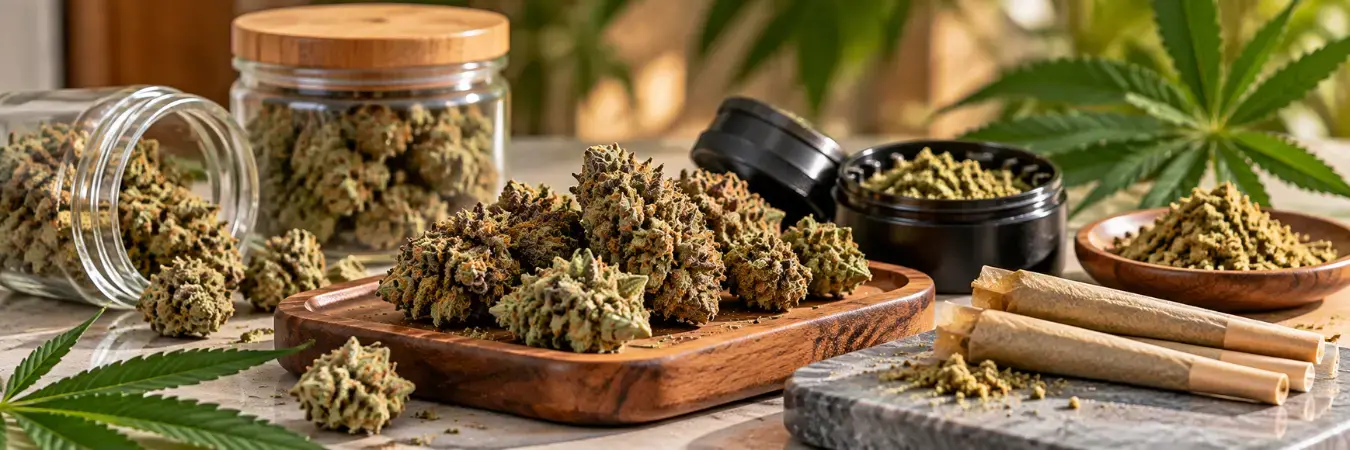
Cannabis flower is the dried and cured bud of the cannabis plant. It contains cannabinoids, terpenes, and other natural compounds. THC and CBD are two of the best-known cannabinoids found in flower. Meanwhile, terpenes contribute to aroma and flavor.
In this guide, you will learn what cannabis flower is, how strains differ, and how to choose the right flower for your preferences.
Understanding Cannabis Flower
Cannabis flower is one of the most recognizable cannabis products. It refers to the mature flowers of the cannabis plant after they have been harvested, dried, and cured.
You can find flowers in many strains, aromas, potencies, and formats. Understanding these basics makes it easier to compare different products.
What Is Cannabis Flower?
Cannabis flower refers to the dried and cured buds of the cannabis plant. These flowers contain cannabinoids, terpenes, and other plant compounds.
THC is the main cannabinoid associated with the intoxicating effects of cannabis. CBD is another common cannabinoid, but it does not produce the same high as THC.
The flowers develop on female cannabis plants. After harvesting, growers dry and cure the buds before they reach consumers. This process helps develop the flower's aroma, texture, and overall characteristics. The final product can look, smell, and taste different depending on its genetics and processing.
You may also hear cannabis flower called bud, nug, or weed flower. These terms usually refer to the same basic cannabis product. Flower can come as whole buds, ground material, or pre-rolls. Therefore, the format can change while the core product remains cannabis flower.
What Is the Difference Between Flower, Bud, and Nug?
The terms of flowers and buds are often used interchangeably. Both usually describe the dried cannabis flowers sold for consumption. A nug is a casual term for an individual piece of cannabis flower. As a result, you may see all three terms used on cannabis menus and product pages.
Lose flowers give consumers more flexibility with the product. Some people prefer whole buds, while others choose ground flowers. Pre-rolls offer another convenient format using prepared flowers. The main difference is usually the preparation and presentation.
What Does Cannabis Flower Look Like?
Cannabis flower can have different shapes, colors, sizes, and textures. Many buds appear green with orange, red, or brown hair-like structures. These structures are called stigmas. You may also notice tiny crystal-like structures covering the surface.
Those structures are called trichomes. They produce resins containing many cannabinoids and terpenes. Trichomes can give some flowers a frosty or sparkling appearance. However, appearance alone does not tell you everything about a product.
What’s Inside Cannabis Flower?
Cannabis flower contains several natural compounds that give each product its unique profile. Cannabinoids influence the chemical makeup of the flower, while terpenes contribute strongly to aroma and flavor.
Trichomes also play an important role because they produce many of these compounds. Together, these components help explain why different flowers can look, smell, and feel different.
THC and Other Cannabinoids
Cannabinoids are naturally occurring compounds found in cannabis. THC is the cannabinoid most associated with intoxication and mind-altering effects.
CBD is another well-known cannabinoid and does not cause the same intoxicating high. Other cannabinoids include CBG, CBN, and CBC.
The cannabinoid profile can vary between flower products. Some products contain mostly THC, while others have more CBD.
Certain flowers may also contain smaller amounts of other cannabinoids. Therefore, checking the product label can help you understand what you are buying.
THCA is another important compound found in raw cannabis flower. Heat can convert THCA into THC through a process called decarboxylation.
This happens during methods such as smoking or vaporizing. As a result, heated flower can produce different effects than unheated cannabis material.
Terpenes and Aroma
Terpenes are natural compounds that contribute to the aroma and flavor of cannabis flower. They are also found in many other plants. Different terpene combinations can create citrus, earthy, floral, pine-like, or spicy aromas.
Common cannabis terpenes include myrcene, limonene, pinene, linalool, and caryophyllene. However, each flower can contain a different combination and concentration. Therefore, two flowers with similar THC levels can still smell and taste very different.
Terpenes are useful when comparing flowers because they provide more information than a strain name alone. Research has found meaningful variation in terpene and cannabinoid profiles across commercial cannabis products.
Trichomes and Resin
Trichomes are tiny structures found across cannabis flowers. They can look like small crystals when viewed closely. These structures produce resin containing cannabinoids, terpenes, and other compounds. They are one reason some cannabis flower looks sticky or frosty.
The number and appearance of trichomes can vary between flowers. However, more visible trichomes do not automatically mean a product is better. Aroma, freshness, cannabinoid content, and the overall product profile also matter.
Cannabis Flower Strains Explained
Cannabis strains are named varieties or cultivars with different genetic and chemical characteristics. You may see products described as Indica, Sativa, Hybrid, or a more specific strain name.
These labels can help organize products, but they do not tell the entire story. Modern research suggests that cannabinoid and terpene profiles can provide more useful details.
What Are Cannabis Strains?
A cannabis strain is a named variety of cannabis with characteristics. These characteristics can include genetics, aroma, appearance, cannabinoid content, and terpene profile. Different strains can therefore produce noticeably different products.
You will often see strain categories such as Indica, Sativa, and Hybrid. However, these traditional categories should not be treated as exact predictions of effects.
Research on more than 100 cannabis samples found that Sativa- and Indica-labeled samples were genetically indistinct at the genome-wide level.
For that reason, it helps to look beyond the strain of the name. Check the cannabinoid and terpene information when it is available. This gives you a more complete picture of the flower.
What Are the Different Types of Cannabis Flower?
Cannabis flower can be grouped in several ways. The most familiar categories are Indica, Sativa, and Hybrid. Products can also differ based on their cannabinoid profile, terpene profile, genetics, and cultivation methods.
At The Center Co. the Flower category includes filters for CBD, Hybrid, Hybrid Indica, Hybrid Sativa, Indica, and Sativa. This makes it easier to browse flowers based on traditional strain categories.
However, these categories should work as starting points rather than strict rules. The actual product profile can vary within each category. Therefore, reading product information is important.
What Is Indica Flower?
Indica flower traditionally refers to cannabis varieties associated with Indica genetics. Many consumers associate Indica with relaxing or heavier experiences. However, an Indica label does not guarantee a specific effect.
Different Indica products can have different THC levels and terpene profiles. Their aromas and flavors can also vary significantly. Therefore, it is useful to compare the complete product profile rather than relying only on the Indica label.
What Is Sativa Flower?
Sativa flower traditionally refers to varieties associated with Sativa genetics. Consumers often associate Sativa with uplifting or energetic experiences. However, the label alone cannot guarantee a particular experience.
Sativa products can have different cannabinoid and terpene profiles. They can also vary in potency, aroma, and flavor. As a result, checking the product information gives you a more useful context.
What Is Hybrid Flower?
Hybrid flower combines genetics from different cannabis varieties. In fact, many modern cannabis products contain mixed genetics. This means Hybrid has become a common category across cannabis menus.
Some products are described as Indica-dominant or Sativa-dominant hybrids. These terms suggest which traditional category the product leans toward. Still, they do not provide a complete picture of its chemistry or effects.
What Is an Indica-Dominant Hybrid?
An Indica-dominant hybrid combines genetics commonly associated with Indica varieties and other cannabis genetics. The term suggests that the flower leans toward traditional Indica characteristics. However, it does not guarantee a specific experience.
For that reason, look at the product's complete profile. THC, CBD, terpene information, aroma, and freshness can all help you compare options. This approach gives you more information than the category name alone.
What Is a Sativa-Dominant Hybrid?
A Sativa-dominant hybrid combines genetics commonly associated with Sativa varieties. The label suggests that Sativa traits are more prominent in the product's genetic background. However, it does not guarantee a specific effect.
Two Sativa-dominant hybrids can have different cannabinoid and terpene profiles. They can also differ in aroma, potency, and appearance. Therefore, product-level information is still important when comparing them.
How Do Cannabis Strains Differ?
Cannabis strains can differ in several important ways. Genetics play a major role in shaping plants. Growing conditions can also affect the final flower. Furthermore, harvesting, drying, curing, and storage can influence the finished product.
Some of the main differences include:
- THC and CBD content
- Other cannabinoid levels
- Terpene profile
- Aroma and flavor
- Bud structure
- Appearance
- Potency
- Freshness
- Growing and curing methods
What Makes One Cannabis Strain Different from Another?
Genetics are one major factor behind differences between cannabis strains. However, genetics is not the only factor. The growing environment, harvest timing, drying process, curing method, and storage conditions can also affect the final product.
The chemical profile is especially useful for comparison. Two flowers may share a similar strain name but still have different terpene levels. Therefore, the same name does not always mean an identical flower.
How Cannabis Flower Is Prepared
Before cannabis flower reaches a dispensary, it goes through several stages. Growing creates flowers, while harvesting determines when the buds are collected.
Drying and curing then prepare the flower for storage and sale. Each stage can affect the final aroma, texture, and overall quality.
Growing and Harvesting
Cannabis flower begins with the cultivation of cannabis plants. Growers select genetics based on desired characteristics and growing conditions. As the plants mature, flowers develop during the flowering stage.
Growers eventually harvest mature flowers. Timing can affect the final characteristics of the product. After harvesting, the flower requires careful handling before it becomes ready for consumers.
Drying and Curing
Drying removes excess moisture from freshly harvested flowers. Curing then allows the flower to develop under controlled conditions. Proper drying and curing can help preserve aroma and texture.
The process also prepares the flower for longer-term storage. Poor handling can affect the product's quality. Therefore, drying and curing are important parts of producing consistent cannabis flower.
Why Freshness Matters
Freshness can affect the aroma, texture, and overall condition of cannabis flower. Flower that becomes too dry may lose some of its original character. Excess moisture can also create storage problems.
For that reason, proper storage matters after the product is purchased. Keeping flowers away from excessive heat, light, air, and moisture can help maintain its condition. Always follow the storage guidance provided on the product packaging.
How Do People Consume Cannabis Flower?
Cannabis flower can be consumed in several ways. Smoking and vaporizing are two common methods for using flowers. Pre-rolls also provide a prepared format that uses ground cannabis flower. Each method has different considerations, so understanding the format can help consumers make informed choices.
Smoking Flower
Smoking involves heating cannabis flower through combustion. Consumers may use joints, pipes, or water pipes. The cannabinoids are inhaled through the resulting smoke.
However, smoking cannabis can expose the lungs to smoke and other potentially harmful compounds. Cannabis use can also affect attention, memory, coordination, and decision-making. Therefore, smoking should not be considered risk-free.
Vaporizing Flower
Some consumers use a dry-herb vaporizer to heat cannabis flower. These devices heat the flower without directly burning it. The resulting vapor can then be inhaled.
Vaporizing is different from smoking, but it is not risk-free. Cannabis products containing THC can still cause impairment. Therefore, consumers should understand the effects and follow responsible-use practices.
Pre-Rolls vs. Loose Flower
Lose flowers gives consumers more flexibility with the product. They can choose how much to prepare and which format to use. Pre-rolls, meanwhile, come prepared with ground flowers.
The main difference is convenience and preparation. Both formats use cannabis flower as their primary material. However, the product label can provide additional information about potency and content.
Understanding Cannabis Flower Potency
Potency is one of the most common factors people consider when choosing cannabis flower. THC percentage is often displayed prominently on product packaging.
However, potency alone does not describe the complete product. Cannabinoids, terpenes, genetics, and individual factors can also matter.
What Does THC Percentage Mean?
THC percentage describes the concentration of THC in cannabis flower. A higher percentage means a greater concentration of THC by weight. However, that number does not guarantee how the flower will affect a particular person.
Individual responses can vary based on several factors. Tolerance, consumption method, product characteristics, and personal sensitivity can all influence the experience. Therefore, the THC percentage should be viewed as one piece of information.
What Does CBD Content Mean?
CBD is another cannabinoid found in cannabis flower. Unlike THC, CBD does not produce the same intoxicating high. Some flower products contain mostly THC, while others have higher CBD content.
Checking CBD content can help you understand the product's cannabinoid profile. It can also help you compare flowers with different formulations. Always check the actual product label because cannabinoid levels can vary.
Why Potency Is Only One Part of the Product
THC percentage can help you compare flower products. However, it does not tell you everything about the flowers. Terpenes, other cannabinoids, genetics, freshness, and personal factors can also contribute to the overall experience.
Factor | What It Tells You |
THC | The concentration of THC in the flower |
CBD | The concentration of CBD in the flower |
Terpenes | Aroma, flavor, and part of the chemical profile |
Genetics | The flower's genetic background |
Freshness | The current condition of the product |
Product label | Available product and cannabinoid information |
How to Choose Cannabis Flower
Choosing cannabis flower does not have to be complicated. Start by understanding the information available on the product label. Then consider cannabinoids, terpenes, aroma, freshness, and your own preferences. This approach can help you compare products without relying on one number or label.
Consider the Cannabinoid Profile
Start by checking the cannabinoid information. Look at THC and CBD levels before focusing only on the strain of the name. This gives you a clearer picture of the product's chemical profile.
If you are new to cannabis, avoid assuming that the highest THC product is automatically the best choice. Different people can respond differently to cannabis. A product that suits one person may not suit another.
Look at the Terpene Profile
Terpenes can help explain differences in aroma and flavor. Look for profiles that match your preferences. For example, some flowers have citrus-like aromas, while others have earthy, floral, pine, or spicy notes.
Terpene information can also help you compare flowers within the same strain category. Still, one terpene should not be treated as a guarantee of a particular effect. Cannabis contains many compounds that work together within the product's overall profile.
Check the Product Label
The product label can provide useful information before you make a choice. Depending on local requirements, it may include THC, CBD, terpene, weight, batch, or testing information.
Use a simple checklist when comparing products:
1. Check the THC and CBD information.
2. Review available terpene details.
3. Check the product weight.
4. Look at packages or harvest information when available.
5. Review any required testing or product information.
6. Follow the product storage instructions.
Consider Your Experience and Preferences
Your personal preferences can also help guide your choice. Think about aroma, flavor, potency, and product format. If you already know which profiles you enjoy, use that experience when comparing flowers.
If you are new to cannabis, keep the process simple. Focus on understanding the product rather than choosing based only on the highest THC percentage. A knowledgeable dispensary team can also help explain product labels and available options.
How to Store Cannabis Flower
Proper storage helps protect cannabis flower after you bring it home. Light, heat, air, and excess moisture can affect the condition of the product. Therefore, a suitable storage environment can help preserve aroma, texture, and freshness.
Protect Flower from Light, Heat, and Excess Moisture
Keep cannabis flower in a suitable, secure container. Avoid leaving it exposed to direct sunlight or excessive heat. You should also avoid conditions with excessive moisture.
The goal is to maintain a stable environment. Follow the storage instructions provided with the product whenever available. Proper handling can help the flower maintain its original characteristics for longer.
Keep Flower Fresh and Secure
Keep cannabis flower securely stored and away from children and pets. Cannabis products should remain in a place where unauthorized people cannot access them. Proper storage also reduces the chance of accidental consumption.
Check the flower before using it if it has been stored for an extended period. Unusual odors, visible mold, or other signs of spoilage can indicate a problem. When in doubt, contact the retailer or manufacturer for guidance.
Cannabis Flower vs. Other Cannabis Products
Cannabis flower is only one type of cannabis product. Other products can use flowers, extracts, or infused ingredients in different ways. Understanding these differences can make it easier to choose a product based on your preferred format and experience.
Product | What It Is | Main Difference |
Cannabis Flower | Dried cannabis buds | Whole-flower format |
Pre-Rolls | Ground flower in a ready format | Prepared for convenience |
Concentrates | Concentrated cannabis extracts | More concentrated format |
Edibles | Cannabis-infused foods or drinks | Consumed rather than inhaled |
Vaporizers | Devices used to vaporize cannabis | Uses vapor instead of traditional smoke |
Flower remains a popular format because it keeps the cannabis plant material intact. Pre-rolls offer a convenient version of the same basic product. Meanwhile, concentrates and edibles use different formats and consumption methods.
The right choice depends on what you are looking for. Understanding the differences can help you compare products more confidently. Always review the product information before making a purchase.
Frequently Asked Questions About Cannabis Flower
Cannabis flower can raise several questions for first-time consumers. The terminology can also feel confusing when you first browse a dispensary menu. These common questions cover the basics and can help you understand flowers more clearly.
What Is Cannabis Flower?
Cannabis flower is the dried and cured bud of the cannabis plant. It contains cannabinoids, terpenes, and other natural compounds. THC is the cannabinoid most associated with the intoxicating effects of cannabis.
Is Cannabis Flower the Same as Weed?
Cannabis flower is commonly called weed or bud. However, weed can also refer more broadly to cannabis. Flower specifically describes the dried buds of the cannabis plant.
What Is the Difference Between Indica, Sativa, and Hybrid Flower?
Indica, Sativa, and Hybrid are traditional categories used to describe cannabis varieties. Consumers often associate each category with certain characteristics. However, research shows that these labels do not consistently predict the full chemical profile of a product.
For that reason, it is useful to consider THC, CBD, terpenes, and other product information. These details can provide more context than the category name alone.
What Are Trichomes on Cannabis Flower?
Trichomes are tiny structures found on cannabis flowers. They produce resin containing cannabinoids and terpenes. They can also give flowers a frosty or crystal-like appearance.
What Does THC Percentage Mean on Flower?
THC percentage describes the concentration of THC in the flower. It can help you compare productivity. However, it does not guarantee how the product will affect you.
How Long Does Cannabis Flower Stay Fresh?
Cannabis flower can maintain its quality for a period of time when stored properly. However, aroma, texture, and other characteristics can change as it ages. Proper storage helps protect the flower from conditions that can reduce its quality.
What Should Beginners Look for When Choosing Cannabis Flower?
Beginners can start by checking THC, CBD, terpene, and product information. Aroma, freshness, format, and personal preferences can also help. Most importantly, avoid choosing a flower based only on its highest THC percentage.
Final Thoughts
Cannabis flower is one of the most familiar cannabis products, but there is more to it than appearance alone. Different flowers can have different cannabinoid levels, terpene profiles, aromas, and genetic backgrounds. Understanding these differences makes it easier to compare products.
Indica, Sativa, and Hybrid labels can provide a starting point. However, they should not be treated as guaranteed descriptions of effects. Instead, look at the complete product profile when that information is available.
Start with the basics and learn how to read the label. Consider cannabinoids, terpenes, freshness, and your own preferences. With a better understanding of cannabis flower, you can make more informed choices and explore different products with greater confidence.
Disclaimer: This content is for general education only and is not medical advice. Cannabis is for adults 21 and over, or qualifying medical patients where applicable.