What Are Cannabis Concentrates? A Beginner’s Guide for Everyone

by The Center Co Team | October 7, 2026
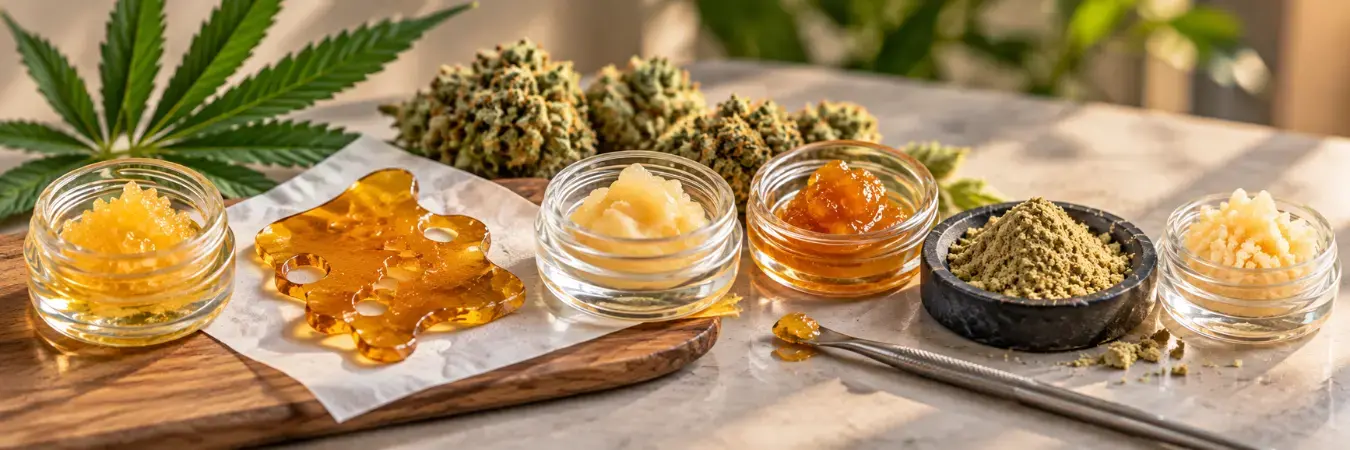
Cannabis concentrates are products made by collecting and concentrating compounds from the cannabis plant. These products can contain much higher levels of THC than traditional cannabis flower. They also come in many forms, including wax, shatter, rosin, live resin, hash, and kief.
If you are new to concentrate on, the terminology can feel confusing at first. However, the basic idea is simple. This guide explains what concentrates are, how they are made, how they differ from flowers, and what beginners should know before exploring them.
Understanding Cannabis Concentrates
A cannabis concentrate is a product that contains concentrated cannabis compounds. These compounds mainly include cannabinoids and terpenes. They are naturally produced in tiny structures called trichomes.
Trichomes are found mostly on cannabis flowers and nearby plant surfaces. They contain many of the compounds that give cannabis its effects, aroma, and flavor. During concentrate production, these compounds are separated or collected from the plant material.
The result is a smaller amount of material with a higher concentration of cannabis compounds. Therefore, concentrate can look and feel very different from dried flowers.
What Makes a Cannabis Concentrate Different?
The biggest difference is concentration. Cannabis flower contains plant material along with cannabinoids, terpenes, and other natural components. Concentrate contains a more concentrated portion of those compounds.
For example, flowers may appear like dried buds. A concentrate can look like sticky oil, soft wax, glass-like shatter, or pressed resin. The texture depends on the type and production method.
Concentrates can also contain significantly more THC than flowers. Health Canada notes that some cannabis extracts can reach very high THC concentrations. Because of this difference, concentrates deserve careful attention to product strength and labeling.
The Role of Cannabinoids and Terpenes
Cannabinoids and terpenes are important parts of the cannabis plant. THC and CBD are two of the best-known cannabinoids. THC is the compound mainly associated with cannabis intoxication. CBD does not produce the same intoxicating effect as THC.
Terpenes, meanwhile, contribute to the aroma and flavor of cannabis. Different cannabis products can have different terpene profiles. As a result, two concentrates can have similar THC levels but still differ in aroma and overall character.
Therefore, THC percentage is only one part of understanding a concentrate. Looking at the complete cannabinoid and terpene information can provide more context.
What Are Cannabis Concentrates Made Of?
Cannabis concentrates begin with cannabis plant material. However, the final product usually contains a much higher proportion of the plant's desired compounds.
The exact composition depends on the concentrate type and production method. Some products focus heavily on cannabinoids. Others aim to preserve more of the plant's natural terpene profile.
Cannabis Flower and Plant Material
Cannabis flowers contain trichomes that produce and store cannabinoids and other compounds. These trichomes are therefore important starting points for many concentrated products.
Some production methods use dried cannabis. Other methods use fresh or freshly harvested materials. The starting material can affect the final characteristics of the concentrate.
However, not every concentrate is made in exactly the same way. Product names such as live resin, rosin, hash, and wax describe different forms and production approaches.
Trichomes, Cannabinoids, and Terpenes
Trichomes are tiny structures that can look like small crystals under magnification. They contain many of the cannabinoids and terpenes found in cannabis.
During concentrate production, manufacturers aim to separate or collect these valuable compounds. The resulting material can then be processed into different concentrate formats.
This is why trichomes are so important when discussing cannabis concentrates. They are closely connected to the compounds that make concentrates different from ordinary plant material.
How Are Cannabis Concentrates Made?
There is no single method for making cannabis concentrates. Different products use different extraction or separation techniques.
At a high level, these methods fall into two broad groups. They are solventless methods and solvent-based methods. The distinction relates to how the desired compounds are separated from the plant material.
Commercial production can involve specialized equipment and controlled processing. Therefore, concentrate production should not be treated as a simple home experiment.
Solventless Extraction Methods
Solventless methods do not rely on chemical solvents to separate the desired cannabis compounds. Instead, they can use physical processes, water, heat, pressure, or mechanical separation.
Common examples include:
- Kief
- Hash
- Bubble
- hash
- Rosin
Health Canada describes physical separation methods for products such as kief and hashish. It also identifies heat and pressure as methods used to produce rosin.
The term "solventless" does not mean that every product has the same characteristics. Each method can produce a different texture, aroma, and cannabinoid profile.
Solvent-Based Extraction Methods
Solvent-based methods use a substance to separate cannabis compounds from plant material. Commercial extraction can involve substances such as ethanol, carbon dioxide, or hydrocarbons.
Some concentrate types, including certain forms of wax and shatter, can be produced through solvent-based extraction. NIDA lists several extraction approaches, including carbon dioxide and flammable solvents.
However, extraction is a specialized production process. Proper equipment, testing, and controlled manufacturing are important for product safety and consistency.
For consumers, the most useful point is simple: the extraction method can affect the final concentrate characteristics.
Exploring the Most Common Types of Cannabis Concentrates
Cannabis concentrates come in many forms. Their names often describe their texture, appearance, production method, or physical characteristics.
Here are some of the common concentrate categories beginners may encounter.
Wax and Badder
Wax is a soft concentrate with a texture that can resemble wax. Badder is another soft concentrate with a whipped or creamy appearance.
Both can contain high concentrations of cannabinoids. Their texture can vary based on processing and storage conditions.
Shatter
Shatter is known for its smooth and glass-like appearance. It can be firm and brittle when handled.
The name comes from its tendency to break or "shatter" when manipulated. However, texture alone does not determine potency or product quality.
Rosin
Rosin is a solventless concentrate made using heat and pressure. The process separates resin-rich material from cannabis without using chemical extraction solvents.
Because rosin is solventless, it is often discussed alongside other solventless concentrates. However, rosin can still vary considerably in texture, aroma, and cannabinoid content.
Live Resin
Live resin is generally associated with cannabis that is processed while fresh or soon after harvest. This approach is intended to preserve more of the plant's natural compounds.
Live resin can have a strong aroma and a rich terpene profile. However, the exact characteristics depend on the product and manufacturing process.
Hash and Kief
Kief consists mainly of separated cannabis trichomes. Hash is generally made by collecting and compressing resin-rich material.
Both are among the more traditional forms of cannabis concentrates. They can also differ significantly in texture, potency, and production methods.
Understanding Cannabis Concentrate Potency
Potency is one of the most important things beginners should understand. Concentrates can contain much higher levels of THC than traditional cannabis flower.
NIDA explains that cannabis concentrates can contain very high levels of THC. The CDC also notes that highly concentrated THC products can produce stronger intoxicating effects and increase the risk of overconsumption.
For that reason, concentrate labels deserve careful attention.
THC and CBD Concentration
THC and CBD are commonly listed on cannabis product labels. The exact information depends on the product and local labeling rules.
A label may show THC as a percentage or as a quantity such as milligrams. Some products also provide CBD information and other cannabinoid details.
When reviewing a concentrate, consider:
- Total THC
- THC percentage
- Total CBD
- CBD percentage
- Other listed cannabinoids
- Product weight
- Batch or testing information
Reading these details can help consumers understand what they are purchasing.
How Potency Differs from Cannabis Flower
Concentrates generally contain a higher concentration of THC than flowers. Health Canada lists some cannabis extracts with THC concentrations reaching much higher levels than dried cannabis.
The CDC also reports that high-THC products can increase the risk of overconsumption. Therefore, a higher THC number should not automatically be viewed as a sign of better quality.
Instead, potency should be considered alongside the product type, cannabinoid profile, terpene profile, and personal experience.
Cannabis Concentrates vs. Flower: What’s the Difference?
Cannabis flower and concentrates come from the same plant. However, they are processed and presented in very different forms.
Feature | Cannabis Flower | Cannabis Concentrates |
Form | Dried plant material | Extracted or separated cannabis compounds |
Main compounds | Cannabinoids and terpenes within flower | Concentrated cannabinoids and terpenes |
THC level | Usually lower than concentrates | Often much higher |
Appearance | Buds or ground flower | Wax, oil, resin, shatter, or other textures |
Variety | Many strains and cultivars | Many concentrate types and formulations |
Label focus | THC, CBD, weight, strain information | THC, CBD, weight, concentrate type, testing information |
Common formats | Flower, pre-rolls | Wax, rosin, live resin, shatter, hash, kief |
The key difference is concentration. Flower retains more of the original plant structure. Concentrates remove or separate much of that material.
As a result, concentrates can deliver much more concentrated amounts of THC. That difference is especially important for people who are unfamiliar with high-potency cannabis products.
How Are Cannabis Concentrates Used?
There are several ways consumers may use cannabis concentrates. The method depends on the specific product and its intended purpose.
Some concentrates are designed for inhalation. Others can be incorporated into different cannabis products.
Dabbing and Vaporizing
Dabbing refers to inhaling vapor produced by heating cannabis concentrate. Concentrates can also be used in certain vaporizers and vape products.
The CDC recognizes dabbing and vaping as methods of consuming cannabis concentrates. It also notes that concentrates used through these methods can contain highly concentrated THC.
Because of their high potency, these products may produce strong effects. Therefore, beginners should understand the product's strength before considering concentrating.
Concentrates in Other Cannabis Products
Some cannabis extracts can become ingredients in other cannabis products. For example, extracts may be used in edible products, oils, or other formulations.
However, not every concentrate is designed for every consumption method. Always follow the product label and manufacturer's intended use.
Avoid modifying products or using them in ways they were not designed for. Regulated products should provide information about their intended use and content.
What Should Beginners Consider Before Choosing a Concentrate?
Choosing a concentrate starts with understanding the product. The goal is not simply to find the highest THC percentage.
Instead, look at the complete product information before making a decision.
Checking Potency and Cannabinoid Information
First, check the THC and CBD information. Then, consider the amount of concentrate in the package.
High THC products can produce stronger intoxicating effects. Therefore, beginners should pay particular attention to potency.
Also, remember that individual responses to cannabis can vary. Factors such as previous experience, consumption method, and THC concentration can influence the experience.
Understanding Product Types and Labels
Next, identify the type of concentrate. Terms such as rosin, live resin, wax, shatter, hash, and kief describe different products.
Then, review the label carefully. Look for:
1. Product name and concentrate type.
2. THC and CBD information.
3. Product weight.
4. Batch or lot information.
5. Testing information.
6. Manufacturer or producer details.
7. Storage instructions.
This information can make unfamiliar concentrate terminology much easier to understand.
Reviewing Testing and Packaging Information
Testing information provides another useful layer of product context. Regulated cannabis systems may require testing for cannabinoid concentrations and other product requirements.
For example, Health Canada requires cannabis extracts to have cannabinoid concentrations determined using validated testing methods.
Packaging also matters. Look for clear labeling and appropriate packaging from a regulated source where legal.
Ultimately, product transparency is more useful than relying only on appearance or marketing language.
How to Store Cannabis Concentrates Properly
Storage can affect the texture, aroma, and overall condition of a concentrate. Heat, light, air, and moisture can influence cannabis products over time.
Therefore, follow the storage instructions provided with the specific product.
As a general approach:
- Keep concentrates in their original container when possible.
- Follow the manufacturer's storage instructions.
- Protect the product from excessive heat.
- Keep it away from direct sunlight.
- Keep containers properly closed.
- Store products securely away from children and pets.
Proper storage becomes especially important for concentrates with delicate textures or terpene-rich profiles.
Frequently Asked Questions About Cannabis Concentrates
What Are Cannabis Concentrates?
Cannabis concentrates are products made by separating or concentrating compounds from cannabis. These compounds include cannabinoids and terpenes. Many concentrates contain much higher THC levels than traditional cannabis flower.
Are Cannabis Concentrates Stronger Than Flower?
Generally, yes. Concentrates often contain significantly higher THC concentrations than flowers. The CDC notes that highly concentrated THC products can produce stronger intoxicating effects.
What Is the Difference Between Cannabis Concentrates and Extracts?
The terms can overlap. An extract is generally produced by separating cannabis compounds from plant material. "Concentrate" is a broader consumer term for products containing concentrated cannabis compounds.
The exact terminology can vary between products and regulations.
What Are Cannabis Concentrates Made Of?
Cannabis concentrates are made from cannabis plant material and its compounds. These include cannabinoids and terpenes stored largely within trichomes. The final composition depends on the concentrate type and production method.
What Is the Difference Between Solventless and Solvent-Based Concentrates?
Solventless concentrates use physical methods such as separation, heat, pressure, or water-based processes. Solvent-based concentrates use substances such as ethanol, carbon dioxide, or hydrocarbons during extraction.
Both approaches can produce different types of cannabis concentrates.
Do Cannabis Concentrates Contain THC and CBD?
Many concentrates contain THC, CBD, or both. However, the cannabinoid profile depends on the source material and production process.
Always check the product label for the actual cannabinoid information.
How Should Cannabis Concentrates Be Stored?
Follow the product's specific storage instructions. Generally, concentrates should be protected from excessive heat, direct sunlight, air, and moisture.
Keep them securely stored and away from children and pets.
A Simple Introduction to Cannabis Concentrates
Cannabis concentrates may seem complicated because they come with many different names and textures. However, the basic concept is straightforward. They concentrate compounds such as cannabinoids and terpenes from the cannabis plant.
The most important difference from flower is potency. Concentrates can contain much higher levels of THC, so understanding the label matters.
Once you understand trichomes, extraction methods, concentrate types, potency, and labeling, the category becomes much easier to navigate. From there, you can explore individual products such as rosin, live resin, wax, shatter, hash, and kief in greater detail.
Disclaimer: This content is for general informational and educational purposes only and does not constitute medical or legal advice. Cannabis laws vary by location, so verify current regulations through official sources. Cannabis is intended for adults 21+ where legally permitted. Always use and store cannabis responsibly and in accordance with applicable laws.